Wednesday, November 18, 2009

Cell Phones, Pizza Grease, and a couple Strokes of the Pen

Prince Raoden of Arelon awoke early that morning, completely unaware that he had been damned for all eternity.
-Opening line to 'Elantris'

--------

Monday morning, I had a 4-minute persuasive presentation for my technical communication class.  Not exactly the definition of a fun morning.  It was a tense wait; I was only the fifth person to present that day, but I still had almost half an hour of gut-wrenching, chair-gripping, nostril-widening waiting.

Finally, my turn to give a presentation arrived.  I think I blacked out during the presentation the guy before me gave, because I don't remember any of his presentation.  Come to think of it, I don't remember much of any of the presentations from that day.  Maybe I was in a zombie-like state.  Either way, I was up next, walking dead or not.  I shambl
ed up front, accessed the virtual drop-box, and managed to find my name in the list.  Opening up the PowerPoint slides, I checked the remote, smashing random buttons with decaying undead fingers until I found the ones that worked.  And then I waited more.

For those of you who have given many presentations before, there's nothing more awkward and silly than standing up front, slides ready to go, and waiting for the people in charge to give you the green light.  So I just stood there, grinning nervously at the people in the classroom, who were surprisingly willing to keep their eyes on my horrifying zombie form.  Then the professor looked up from his note-taking, and gave me... the nod.

And, at almost the same time, my cellphone started ringing.  Out loud.  Up front.  When I was about to be graded.  My slick zombie fingers almost dropped the phone as a sly grin edged its way onto my face.

"Yeah, this is a bad time, I'm about to make my presentation on..."

ILLEGALLY FORMATTED DATA, BACKTRACKING TO PREVIOUSLY CORRECTED DATA

The class was about to start, but I had a couple minutes.  Time enough to put the plan into action.  I leaned over to the student closest to me, three chairs to my left.

"Hey, do you think you could call my cell phone? Like, right as I'm ready to start presenting?"

DATA REFORMATTED, RETURNING  TO ORIGINAL POSITION

"...ringing cell phones! As you can see, cell phone ringtones are a major distraction..."

Bingo! The hook worked just as planned.  And just like that, I went from being a zombie back to a normal human being.  And I was eager, instead of lethargic.  Probably a little too eager: I went over the time limit, which earned me some docked points.  But it was still went really well: the hook was well-received, and it kept their attention from the start.  That was one of the more fun things I've done this quarter!

--------

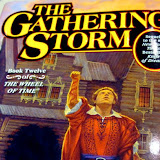
One of the events I've been looking forward to took place tonight.  A bit of research, my trench coat, and a hefty book, and I was out the door toward the University Bookstore.  The Gathering Storm's big book tour was here at last.

While it wasn't too big or bombastic, there were plenty of people there for Brandon Sanderson's signing.  And quite a lot of random posters, bumper stickers, and other goodies to pick up.  I grabbed Elantris while I was there, the first paperback I've actually found.  Brandon was gracious enough to sign both my copy of The Gathering Storm and Elantris, so I came away happy.  Soaked from the rain, but happy.  Good thing that trench coat keeps the rain off.


Brandon Sanderson Book Signing

Local Cuisine

Saturday, November 14, 2009

Musical Motifs: Villainry

One of the most powerful tools in music is the leitmotif, a simple melody or line that ties to a concrete idea.  Think of the Jeopardy theme.  What do you think of when you hear it? Tapping your foot while waiting for something?

The true power of leitmotifs, however, is seen through the relatively recent media of movies and games.  The soundtracks made for these are often made up of a set of themes, describing situations, places, or people integral to the story.  The strength of these themes, and how much they are varied within the soundtrack, is what makes them so powerful.

Today, I'm going to look at a few different themes, tied with one of the primary features of any story: the villain.  There are a several kinds of villains that are seen frequently.

1. The Insane (or totally evil) Villain

This kind of villain is seen more frequently recently, thought there are several good examples in older literature, as well.  The themes tend to follow the same thought process as the villain: chaotic, unpredictable, or simply crazy.  Their insanity, however, is a direct result of their evil hearts.
  • The Dark Knight: Why So Serious? 
    • While this theme wasn't varied much in the movie, everything about it carries the Joker's broken mind: skittering and jumping, screeching and discordant.

2. The Melancholy Villain

These villains are generally evil, but with a past or motivation that usually makes the reader/watcher want to sympathize with them, despite their deeds.  Their themes are quieter, and saddening, though they can change to a more menacing one with a slight touch of the reins.

  • Full Metal Alchemist: Homunculus, Transient Life, Thread of Life 
    • The homunculi were undoubtedly evil: they destroyed thousands of lives, just because of their desire to be human.  But that same desire, and the sadness of having the memories of their lives before being homunculi make them sad characters, as well.
  • Phantom of the Opera: Why So Silent
    • His selfish desire for Christine overshadows everything he does, but his sad past, his mocked face, and his forced seclusion make you pity him however slightly.  His theme is not, however, the classic one you've heard.  The middle of this song is his true theme, though I can't find any other examples.  This one also fits somewhat in the insane category, due to its edgy quality (and the character's obvious insanity).

3. The Selfish Villain


Whereas the insane villain is simply evil for evil's sake, the selfish villain often has a personal goal or motivation for the evil they do.  Their themes are more structured than those of the insane villains, reflecting the often ordered way with which they attempt to reach their goals.

  • Full Metal Alchemist: Deep ForestDante, Warning, Dancing, Revelation 
    • Dante was the ultimate extension of the motivations of the homunculi.  She discovered an alchemic method that would allow her to live forever, by body-jumping; however, the cost of each jump was thousands of human lives.  She lived for 400 years this way.  There are several versions of her theme, each becoming more threatening as more is revealed about her past and who she really is.

These are all the representative themes I can think of for today.  The strength of all (or most) of these is their frequent use and variation.  Try listening for these kinds of themes next time you watch a movie.  Lord of the Rings, for example, has a fascinating score, filled with all sorts of themes, each tied to a person, nation, concept, and the list goes on.  Pick out each one as you listen, try to follow the thread each motif weaves.  It's a fascinating way to look at music, and it can deepen your appreciation for a set of pieces.
(And for those of you too lazy, this site dissects it for you.  Incredible work!)


Motifs also affects the way we view the movie or game: whether we realize it or not, the themes tie us emotionally to people.  As the themes change along with the character's circumstances, our emotions are swept along with it.  This is one of the most potent tools in music: the ability to affect people emotionally.  I'll talk more about this in later posts.


--------


Picture of the day:


From Dorm Mini-Tour: Lander


    Tuesday, November 10, 2009

    Birthday Tour

    Just watch me, L.  I'll solve equations with my right hand, and write names with my left! I'll take a potato chip... and I'll eat it!
    -Death Note
    --------

    Been awhile since I posted.  There hasn't been much to speak of going on, besides midterm fun.  But, since my birthday was this Friday, I thought I'd put a little effort into a post.  But just a little.  After all, I still need a couple brain cells for the second part of this quarter.

    Went home to hang out with friends for the aforementioned birthday.  And pounded down so much sugar, I'm surprised I didn't wipe out completely the next day.  As it was, we still managed to go camera hunting.  The family all went; we brought our decoys (my dad's big camera lenses), scents (battery acid), and rifles (a loaded debit card; Visa, I think).  We hunted in a couple locations for a decently sized one, so we would be sure to be able to fit it on the car.  We finally spotted a couple herds, but nothing small as we were looking for.  One of the big males told us about a second herd to the south; I guess someone else got his girlfriend, or something.

    We ended up getting a Canon PowerShot A1100 IS.  Nothing incredibly fancy, but it should be plenty for taking decent pictures around campus.  I even took the time to make a mini-tour of Lander! Keep an eye out on updates.  I'll probably be doing more building tours, and who knows, you may even see the infamous garbage squirrels of UW.

    Tuesday, October 27, 2009

    Irredeemable Evil in Fantasy

    His last invention was an Evil Lasagna. It didn't kill anyone, and it actually tasted pretty good.
    -Igor

    --------

    Fantasy writers should be especially familiar with the concepts of irredeemable evil.  It provides a way out for a bigger moral dilemma many authors have probably faced: how can I create conflict in a story, have it be morally upright, and yet still have any decent measure of action scenes? I think part of this problem lies in the killing of any being who has a soul, and our view on how pure, evil, or redeemable the soul is.

    Those with a Biblical worldview, like myself, believe that the heart of every man is, inherently, 'deceitful, and desperately wicked' (Jeremiah 17:9).  However, due to Christ's work on the Cross, and the open call to repentance provided by the Gospel, we have no right to simply kill the unsaved.  We can never assume a person cannot be saved, no matter how depraved or sickening their sin is.  Paul considered himself the worst of sinners, and yet Christ chose him to be an apostle.  No man is beyond God's reach; his glory cannot be dimmed by our depravity.  God still demands justice for sins, but it is not our place to deal this justice.  Under this view, the killing of any man is inexcusable.  But this is where the concept of irredeemability comes in.

    1 John 5:16-17: 16 - If anyone sees his brother committing a sin not leading to death, he shall ask, and God will give him life -- to those who commit sins that do not lead to death.  There is sin that leads to death; I do not say that one should pray for that.  All wrongdoing is sin, but there is sin that does not lead to death.

    This verse tells us that it is possible for a person to sin in such a way that they become totally, irreparably spiritually dead.  However, as finite human beings, we can make no assumptions about the state of another person's soul.  It is not our place to judge any person based on their deeds, as we know that no sin is too grievous for God to forgive (if you need examples, look at Paul/Saul!).  We must hold all men as redeemable.  This is what lies at the focus of who we directly witness to, and the manner in which we treat others.

    Now, in a fantasy or sci-fi world, people expect a lot of action.  That's generally the case with these genres.  But, if you wanted to work within a Biblical (or moral) view, the natural question comes: is it ever right to kill any person, or other fully sentient being (sentient here meaning having a soul)? Even killing someone who is considered evil by most others in the world could not be justified, especially with a vindictive intent in the killer's heart.  Irredeemability makes its point here.  The best equivalencies I can make here are tied to Tolkien's Lord of the Rings, so I will demonstrate with that frame of reference in mind.

    1. Redeemable Beings - Gollum and humankind
    Gollum was an absolutely foul and pitiful creature by the time he appears in Lord of the Rings.  The bitterness and malice of the ring has all but consumed him.  Yet Frodo, when he is attacked by Gollum, chooses not to kill him, as he very well could, given his past deeds.  He instead allowed him to live, earning Gollum's partial loyalty.  Frodo truly believed Gollum could be redeemed, and through his kind treatment, he almost was.  Frodo, also feeling the corruption of the ring, could pity and empathize with Gollum, much as we, too, are lost sinners, and know how fallen we are.

    Sam, on the other hand, saw only the faults of Gollum, and believed he should be killed immediately, before he betrayed them to their deaths.  Sam's harsh treatment of Gollum, and the three's eventual capture on the outskirts of Gondor and Mordor, eventually lead to Gollum's hatred and betrayal.  However, everything would likely have ended differently if it were not for Gollum's decisions.  This is an excellent depiction of the state of man, really, and even though Gollum was never redeemed, it is shown that he was able to be, and that is key.  This theme really runs throughout much of Lord of the Rings: Aragorn and his lineage, and Boromir's struggle in trying to use the ring are both excellent examples as well.

    2. Irredeemable Beings - Orcs and demons
    When you see the orcs, goblins, and other foul beings in Lord of the Rings, you see only monsters filled with malice, hatred, selfishness, covetousness, murder... the list goes on.  And there is never a sign that they would want anything but what they already desire: the death of all other beings, men, elves, and dwarves.  You never see one acting in a remotely kind, generous, or selfless manner.  They are completely and irreparably evil, and their influence on the world corrupts it.

    Unlike killing redeemable beings, the destruction of the irredeemable carries with it no consequence, as long as the killer has the correct mindset in doing so.  It would be one thing to defend the people of your homeland; it would be another to kill simply for the sake of killing, to sate ones bloodlust.  While the killing itself would carry no consequence, the heart may corrupt itself in doing so.  This still allows for strong moral problems to be presented and confronted by characters, while still allowing the action scenes to take place.  It allows for a two-fold battle to take place, as well: while a force of irredeemable darkness can simply be dispatched, a redeemable people can not be dealt with so simply, not without violent repercussions to one's soul.

    3. Breaking Point Beings - Ringwraiths
    While redeemable Beings are always redeemable, as seen with Gollum, Tolkien also brings with him another type, which I've labeled the Breaking Point Being.  Nine men were given rings of power when they were first formed, but as Sauron corrupted them with the One Ring, the mens' hearts grew corrupted, too, until they reached the breaking point, becoming the Ringwraiths.  At this point, they turn from redeemable, to permanently irredeemable.

    In Tolkien's world, men are all Breaking Point beings.  Elves, I believe, have more of a resistance to the corruption; I'm not sure how affected they would be.  Dwarves lost their rings, clumsy things.  And Hobbits show a natural resistance to the ring, as well: look at Gollum.  While not much is seen of the mechanism behind the ring's corruption, it can be safely assumed that there are actually no redeemable beings in Lord of the Rings, only Breaking Point beings.  This allows for some interesting possibilities, though it should be noted that once a person has crossed that line, the effects are tangible.  There is no guesswork: you know a wraith has crossed from being redeemable to irredeemable.  And this is what separates a fantasy world from reality.  We do not have the luxury of seeing these effects; we can only assume that any man is still savable.

    So, in conclusion, keep an eye for this in fiction.  Be aware of the difference between killing evil in a fantasy world, and dealing justice in the real one.  Also use these ideas to weigh a character's actions in dealing his own judgment on others: is the person redeemable, or not?

    Also keep in mind that the God-given judicial system (albeit corrupted by us) allows us to make impartial judgments based on a person's past behavior.  This is, really, a way to give punishment for one's deeds here on Earth.  And, really, it gives the person a chance to repent, even if sentenced to death.  Prisoners have time to consider their decisions, and though they will still suffer the consequences, they can still be redeemed.  And that should always be considered before simply killing someone for the murder of a family.
    Monday, October 26, 2009

    My life is rearranging (and my dorm is too)

    No, that's not how it works. Some traits are more dominant, so there is the possibility that if you cross A with B, it could resemble A more. Moment of truth: does she look like her dad or her mom? Either way, she's a monster, but if she's gotta be a potato or a tomato, please let her be a tomato!
    -Lieutenant Havoc, Full Metal Alchemist
    --------

    Chris had a flash of inspiration today, involving the juggling of furniture. Over the weekend, while I was back at home, he brought in a TV set and his old Nintendo 64 console. Problem was, there was no way to sit comfortably in a group to play with his friends. So he decided that, since he didn't use his desk much, he would toss it into one of the study rooms on our floor, and replace it with a couch, which, incidentally, came from the 8th floor lounge. From what I can tell, the 8th floor doesn't use their couches. They just stack them into giant games of Jenga, and Chris figured they wouldn't miss one couch. So down came the desk, down came the sofa, and down came all the stuff on the shelves. At this point, he realized he'd have to rearrange the whole room to get the sofa into place. Joyous.

    (Incidentally, someone was trying to play Jenga.  On the ferry.  On a rocking boat.  And I think she was blonde, too.)

    The next hour or so was spent rearranging food items, refrigerators, closets, beds, stacks of cardboard boxes, books, TV sets, cabinets, chess boards, laptops, wires, chairs, and various other small items. Finally, the fridge was moved to the opposite corner, with the TV taking its place. The sofa is positioned where the desk used to be, right behind me. Nice to know people can sit there and stare at my dandruff-flaked back. Almost like watching the snow fall outside, I guess. How nostalgic.

    Halloween is coming near. I'm really not sure if I'm going to want to be in the dorms when it rolls around, though. People do strange things around this time. And no, it's not the ghosts' fault. Whatever happens, I'm hoping to be away from the dorms. Maybe I'm overreacting or guessing. Maybe not. Guess I'll find out pretty quick. In the meanwhile, it hasn't affected school, thankfully.

    Homework's in full swing now for all four classes, so I'm going to get back to work. Good times!


    P R O J E C T   R E A L I T Y


    Craig Alder – Hero, Security Technician for ElemenTech

    Now that the world has settled into using the AtomWall system, hackers seem to be a nonexistent issue.  But when things start going wrong with firewalls, ElemenTech hires a team of hacking experts (known as the High Five), trains them in the use of the special NetHack software, and gives them the task of repairing dysfunctional AtomWalls.

    When the problems get worse, the corporation begins to hire regular individuals for the Security Technician team.  Craig Alder is one of these special men.  He’s rather nervous about having a new job, but he quickly picks up the pace.  A co-worker, Brent, is one of the High Five.  He helps Craig along, and makes sure he understands the core ideas behind the system.


    Brent – One of the High Five, the top Hackers in the ST team.

    Early on in Craig’s new job, a consistent defect in the firewalls begins to grow.  He’s been able to repair the effects of these damaged systems, but although he does not realize it, he is only cutting off the tail of the worm: the defects continue to grow.

    It was finally discovered that someone had broken into the developer’s department at ElemenTech and corrupted an important file for the next firewall patch, leaving the AtomWall with a gaping back-door.  After some investigation, Brent was found to be the perpetrator, and was promptly fired, and a warrant released for his arrest.  However, he was nowhere to be found.  Most employees thought he corrupted the file to achieve the all-important quota: if more firewalls broke, there would be more for him to fix.


    Lianna – Craig’s girlfriend, inexperienced hacker

    Craig confides much about his job with his girlfriend, Lianna.  He is careful to hide the security-sensitive information restricted by the Corporation, but things slip out.  One night, after work, Craig tells Lianna about a critical factor: Morris’ plans for Project Reality.

    Lianna does more research, and discovers the ultimate purpose of the project: The project is a framework for a human ‘utopia’, a means by which the planet could be controlled.  Once created, Project Reality would allow a human to rest in a form of stasis, keep them nourished through elemental energy-absorption techniques, and allow the new ‘plants’ to view the world as it could be through virtual-reality machines.  Essentially, the world would be comatose, living only in a non-existent reality.

    Lianna realizes what this would mean for the world if this occurs, and begins trying to get Craig to help.  Craig thinks she’s getting too emotional about it, and vaguely ignores her.  Desperate, she turns elsewhere, and eventually finds someone who agrees with her cause: Kroger Lindstrom.  It was he who had enlisted Brent’s help to try and create a back-door to the firewalls, trying to destroy the corporation.  Craig, however, had destroyed that plan, and Kroger is looking for another way to attack ElemenTech.  Aided by Lianna, they begin initiating several plans to take it down.

    Wednesday, October 21, 2009

    .Elementa - Project Reality (Escapism, Ends Justifying Means)

    I've always wondered why there aren't more games based on hacking.  Not that I condone illegal hacking as a beneficial activity, but rather the use of hacking in a security-based setting.  Hackers are able to find leaks in systems other people would be hard-pressed to even think of, and then help fix said problems, so other, more malicious hackers can't take advantage of the holes.  I made a game system awhile back, when me and some friends were trying to make our own playing card games.  While the card games epically failed, the system concept I came up with stuck with me.  I began making a basic storyline, and over time, it has grown into a large project.  Thought this will probably never come to fruition, and the storyline definitely has flaws, I designed it to confront two problems:

    1. Escapism
    I wasn't sure what to call this at first, but I recently saw this term used, and realized that's the problem I'd been thinking about the whole time.  Escapism is just what it sounds like: trying to escape from problems or routine in life through entertainment, or by literally escaping.  Nowadays, this is accomplished through games, television, and books.  We are quite good at using escapism as a way to remove ourselves from anything we don't want to approach or confront in our lives.  We instead turn to something that cannot ultimately comfort, and only leaves problems to fester.  The story in Project Reality turns to something even more sinister: what would a fake reality be, one where one wouldn't have to worry about working, eating, or other essentials of living?

    2. Ends Justifying the Means
    When you want to get something done, how you accomplish your goal does matter.  In fact, often, it matters just as much as the goal itself.  If a pacifist decides to destroy the military to gain world peace, do the ends justify the means? Or is the person really a hypocrite, looking for an outlet for rebellion? If we manage to save someone's life by lying, is our testimony left unstained? Does the Bible ever say we can lie if someone's life is on the line? The ends do not justify the means.  Just because we feel that we will accomplish some greater good does not mean we can do anything to get there.  The second antagonist deals with this in some very strong ways.

    These two are the chief problems I confront, though there are also elements of jealousy, sibling rivalry taken to extreme measures, and the ethical quality of hacking present throughout, as well.  Without further adieu, I present the first part of...


    Project Reality


    The Elementa Network

    In the .Elementa world, the very principles of nature itself can be altered through the modern marvel of electronics.  The entire world is beginning to discover the possibilities: Security systems guarded by liquid barriers; military bases surround by shrouds of darkness; air traffic directed along newly-made wind currents…

    The ElemenTech Corporation was formed to effect all these changes.  Both inside and out, technology reflects the six elements inherent worldwide.  There are even checks and balances built into the systems, preventing an over-load of any one element to cause chaos to both the internal data and the external surroundings.  The AtomWall security system transforms binary computer data into an elemental fortress, prepared to take on any intruder.  In essence, the more data a system contains, the stronger the wall will be.


    Morris Lindstrom – President of the ElemenTech Corporation

    The president of the corporation, Morris Lindstrom, was the inventor and mastermind of the project as well.  It was rumored that his younger brother, Kroger Lindstrom, helped with the creation of the system; however, no one had ever seen any proof that he had ever aided the project, aside from a secretive lawsuit soon after the Corporation started.

    Morris is known to have excellent business sense.  He ensures the Corporation’s success by paying all his employees a generous salary, while complementing it with a very strict quota.  If you fail to meet the quota, you’re cut from the Corporation, no questions asked.

    Morris is at last satisfied with the progress of the AtomWall system, and is now prepared to move on to the next step of the master plan: Project Reality.


    Kroger Lindstrom – Engineering Genius,  Inventor of the Elementa network

    Morris Lindstrom not only had a good head for business, he also had an incredible sense of back-stabbing politics.  He had worked on the system with his brother, Kroger, who was the genius behind the system.  When the product was nearly complete, Morris went behind Kroger’s back and started the ElemenTech Corporation, stealing all the research and technology at the latest possible moment.  When Kroger discovered what happened, he attempted to shut down the Corporation with a lawsuit; Morris, however, was able to take down the lawsuit by buying out Kroger’s lawyer.  Kroger, furious at being fooled so easily, vanished without a trace to seek his revenge.

    Tuesday, October 20, 2009

    Sticks and Stones and Stitches

    May you have a happy birthday;
    And wherever your head may now lay,
    May it be cushioned by spam and jellay!
    --------

    Poor Jesse! This morning, he was feeling pretty bad, so he went over to Hall Health.  They told him he had strep throat, and that they'd have to do surgery in his throat to remove fluid from his flooding tonsils.  He was understandably scared; however, after having a few more doctors inspect his throat, they concluded he only had a nasty case of tonsilitis.  So he's in bed now, feeling pretty blech.  Hope he's feeling better soon.

    So, there's a birthday boy among the readers, if I understand it correctly.  When I first learned the lockpicking skills at 4 years of age, I tested it on his head with a bunch of Hot Wheels cars.  While those are understandably not the best picks, it certainly opened up his poor little 2-year-old forehead.  He got better, though.

    Then there was the red wagon we had in California.  One of us would sit, while the other would pull in circles around the tree in our backyard.  He decided it was his turn, so I began running with the wagon behind.  For the fun of it, I decided to take him through the best part of the ride really fast: the rocky, rooty section underneath the tree swing.  I easily dodged the wooden swing base.  He, however, didn't.  The corner of the swing caught him right on the top of his noggin.  Stitches!

    This was also the kid who loved to eat.  He found his way into the kitchen one day, and saw some pudding sitting in the open dishwasher door, which he rapidly consumed.  He had to go to the hospital to have the detergent pumped out of his stomach.

    Ever since he learned his Basic Weaponry skill, he's collected various sticks, named them, patched them up, and beautified them in various ways.  He then uses one or two select special ones to beat on various opponents, whether they be trees, people, ghosts, or the latest threat to the peace of the tree fort.

    Ethan, here's to another year.  Happy 17th birthday!